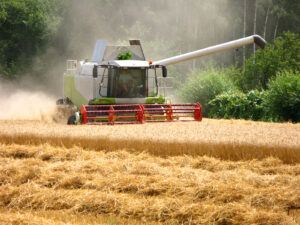
Accident rates are high in the commercial farming industry. According to the United States Department of Agriculture, “From Jan. 1, 2015, to Dec. 31, 2019, more than 60,000 people were treated in emergency departments for nonfatal, agricultural-related injuries. Significantly, nearly a third of those injured were youths.” Many more injuries go unreported.
The fall harvest, in particular, is one of the most dangerous seasons of the year for the agriculture industry. Farmers and agriculture workers are exposed to hazardous conditions including working with dangerous machinery and large animals. If you or someone that you love has been injured in a farm accident, you may have legal recourse. Our team of highly experienced Georgia farming accident lawyers are here to help in any way that we can. In fact, we’ve recently obtained a $2,000,000 settlement for the family of a worker killed on a farm. We can evaluate all of the unique facts of your case and let you know if you have a claim that can be pursued. You’re always welcome to reach out to us anytime at 678-831-6521.
Farms can be very complex locations with many different hazards. An accident may occur due to a variety of different factors including fatigue, inattention, and dangerous workplace conditions. This is why it is so important that every person working on a form is properly trained and able to identify potential hazards. What follows below are some of the most common causes of farming accidents.
Machinery Rollovers: Tractor and other types of heavy machinery can be very difficult to operate. They are notoriously top heavy and thus more prone to rolling over. In fact, the United States Department of Labor has estimated that 44% of all farm accidents involve tractor rollovers. According to Penn State, “Tractor rollovers are the single deadliest type of injury incident on farms in the United States.”
Machinery Entrapment: Entanglements with heavy machinery is another major cause of serious injury and death on farms. Clothing, limbs, fingers, and other body parts can become entrapped in the complex gears of farm equipment.
Falls: People on farms are required to work at elevated heights on numerous occasions. This includes pruning trees, scaling barns, and installing irrigation systems. Sadly, this means that a number of people are seriously injured or killed each year in falls on farms.
Chemical Exposure: Commercial farms utilize a number of very strong and hazardous chemicals including pesticides, herbicides, fungicides, and ammonia just to name a few. Long-term exposure to these chemicals has been linked to dementia, respiratory illnesses, and cancer.
Suffocation: A large number of farm accidents involve suffocation and asphyxiation. These could happen in buildings or areas with improper ventilation. Workers can also become stuck in grain silos. These silos can act like quick sand and are responsible for an estimated 30 deaths each year in the United States.
Electrical Shock: Workers on farms are exposed to many different potential electrical hazards. This could include contact with overhead power lines. It could also include faulty wiring in buildings or farm equipment.
Preventing farm accidents requires a combination of proper training, adherence to safety protocols and equipment maintenance. Farm owners should do everything within their power to keep workers safe and reduce the risk of accidents. But far too often this does not occur. In many situations, needed safety measures are skipped to increase a farm’s profitability.
Liability For Farm Accidents
Depending on the facts of any case, there could be numerous liable parties for any farm accident. O.C.G.A 34-9-11 indicates workers must recover damages sustained on the job through the worker’s compensation statute. However, “farm laborers” are exempt from the state’s worker’s compensation law. Secondly, the statute only applies to businesses that have at least three employees “regularly in service.” Moreover, an injured worker may be able to pursue a liability claim against a third party. There could be numerous sources of third party liability for any farm accident.
Delivery Companies: Farms need tons and tons of goods and equipment delivered each year. Most of these products are transported to farms on trucks. If a worker is injured due to the negligence of a truck driver, they may be able to pursue a claim against the delivery company that owned the truck.
Product Manufacturers: All companies have a legal obligation to make products that are reasonably safe. Companies can be liable for accidents if their product was inherently dangerous or otherwise defective. For example, many tractor companies have been sued in civil claims that alleged their tractor had defective rollover protection structures (“ROPS”).
Contractors: Much like construction companies, it is common for farms to utilize numerous contractors. If a contractor was negligent, their employer could also be held at fault. This may include instances when a contractor was operating heavy machinery in an unsafe manner.
Pesticide Companies: There have been numerous lawsuits after farm workers were sprayed with dangerous pesticides and other chemicals by aircraft. Workers should never be directly exposed to dangerous pesticides or chemicals.
Liability will largely depend on the status of the person injured. Under Georgia premises liability law, accident victims are able to hold property owners liable for injuries or deaths caused by a dangerous condition on their property. In other words, a guest or invitee can hold a farm directly responsible if they are injured. When a property owner has actual or constructive notice of a dangerous condition with their property, they must act.
Why You Should Hire A Farm Accident Attorney
Being seriously injured on a farm can be one of the most difficult things that many people will ever go through. Accident victims may need to take extensive time off of work. They may also be left with high medical bills. It is common to feel overwhelmed if you’ve been injured. But it is important for accident victims to understand that they do have rights. There are a number of reasons that a person should consider hiring a personal injury attorney if they’ve been injured on a farm.
Determining Liability: Finding liable parties in any farm accident can be a complex task. This is particularly true if the person injured was an employee of the farm. A personal injury attorney can investigate the circumstances of any accident and identify responsible parties.
Collecting Evidence: Building a strong case requires gathering extensive amounts of evidence. A personal injury attorney can help ensure that critical pieces of evidence are being properly preserved. They can also subpoena records that can be useful in demonstrating who was at fault for any accident.
Assessing Damages: A personal injury attorney can help determine the full extent of damages following any accident. This includes both economic and non-economic damages.
Negotiating with Insurance Companies: Dealing with insurance companies can be incredibly challenging. This is especially true for individuals not familiar with the process. A personal injury attorney can make sure that your case is being presented in the strongest light possible.
Representation in the Courtroom: Not every claim settles outside of court. A personal injury attorney can take your case to trial if that is what is required to get you the best outcome. Also, if the insurance company knows that you’ve hired a lawyer who is willing to take your case to trial, they’re far more likely to offer a fair out-of-court settlement.
There is a tremendous peace of mind that comes with having a skilled legal advocate fighting on your behalf. If you’ve been injured on a farm, a farm accident attorney can help guide you through the legal process and help ensure that your rights are being protected. There are no upfront costs associated with hiring an attorney and they only get paid from the opposing party if they are able to successfully resolve your claim.
Getting Legal Help After A Farm Accident
We at The Butler Kahn Law Firm understand how difficult it can be to move forward after any serious accident. This is why we are so committed to helping accident victims get justice. Unlike many other firms that handle a wide variety of legal claims, we focus entirely on helping people and families who have been harmed in accidents. We’ve recovered hundreds of millions in verdicts and settlements for our deserving clients.
Having skilled legal counsel can often mean the difference between winning or losing your case. If you’ve been injured on a farm, our team of farm accident attorneys are here to help you in any way that we can. At our law firm, clients and their interests always come first. You can reach out to us anytime at 678-831-6521.
Frequently Asked Questions
Tractor rollovers top the list — they’re involved in an estimated 44% of farm accidents and are considered the single deadliest incident type on American farms. Machinery entrapment, falls from elevated work like pruning or roofing, chemical exposure to pesticides and fungicides, grain silo suffocation, and electrical shock from power lines or faulty equipment round out the most frequent causes, and the fall harvest season sees a sharp spike in all of them.
Not usually. Georgia’s workers’ compensation law specifically excludes “farm laborers” from coverage under O.C.G.A. § 34-9-2(a)(2), so most agricultural employees can’t file a standard workers’ comp claim the way employees in other industries can. A farm employer can voluntarily opt into providing coverage under O.C.G.A. § 34-9-2.3, but unless they’ve done that, an injured farm worker generally has to pursue a claim through ordinary negligence or third-party liability law instead.
It depends heavily on how the injury happened and who was involved — the farm or property owner, a delivery company whose driver caused a collision, an equipment manufacturer, a contractor working on-site, or a pesticide company are all potential defendants. Because farm laborers fall outside workers’ comp, identifying a viable third party often becomes the central issue in getting an injured worker compensated at all.
Yes, if the tractor lacked adequate rollover protection or had another design or manufacturing defect. Several manufacturers have faced civil claims alleging their equipment had defective or missing ROPS (rollover protective structures), and Georgia’s product liability law under O.C.G.A. § 51-1-11 allows these claims — though they’re subject to a strict ten-year statute of repose running from the date the product was first sold new, so older equipment can fall outside the window entirely.
Generally yes, if you were a guest or invitee rather than an employee. Georgia’s premises liability law lets accident victims hold property owners responsible for injuries caused by a dangerous condition when the owner had actual or constructive notice of the hazard and failed to address it — the same standard that applies to any other property owner in the state.
Get medical evaluation right away, even if symptoms seem mild at first, since chemical exposure effects like respiratory irritation can worsen or take time to fully present. Document when and how the exposure happened — aerial spraying incidents in particular have led to lawsuits against pesticide companies when workers were directly sprayed without adequate warning or protection.
An attorney typically pursues both economic damages, like medical bills and lost income, and non-economic damages for pain and suffering, with the total depending heavily on which liable party is pursued and under what legal theory. Because a workers’ comp claim usually isn’t available to farm laborers, a successful third-party liability case can often result in more complete compensation than a comp claim would have provided in the first place.
Two years from the date of the injury for most personal injury claims under O.C.G.A. § 9-3-33, or two years from the date of death for a wrongful death claim. Product liability claims against equipment manufacturers carry that same two-year window but are also capped by the separate ten-year statute of repose under O.C.G.A. § 51-1-11, so it’s worth having a case reviewed early to sort out which deadlines actually apply.
Because farm laborers typically fall outside workers’ compensation, a fatal accident often has to be pursued as a wrongful death claim against a negligent third party rather than through a comp death benefit. Butler Kahn recently secured a $2,000,000 settlement for the family of a worker killed in a farming accident, illustrating that a well-built third-party claim can provide meaningful compensation even without workers’ comp in play.
Farm accident cases tend to involve more moving parts than a typical injury claim — sorting through multiple potentially liable parties, subpoenaing maintenance and safety records, and dealing with insurers who know exactly how thin the legal protections are for farm workers. An attorney working on contingency costs nothing upfront and only gets paid if the claim succeeds, which lowers the barrier to getting a case properly investigated rather than accepting whatever an insurance adjuster first offers.
Jeb ButlerState Bar: #116955
Jeb Butler’s career as a Georgia trial lawyer has led to a $150 million verdict in a product liability case against Chrysler for a dangerous vehicle design that caused the death of a child, a $45 million settlement for a young man who permanently lost the ability to walk and talk, a $3,973,260 settlement after a boating accident, and a $1,250,000 settlement in a pedestrian case, and numerous other verdicts and settlements, many of which are confidential at the defendant’s insistence. Jeb has worked on several cases that led to systemic changes and improvements in public safety. He has been repeatedly recognized as a Georgia SuperLawyer and ranks among Georgia’s legal elite. Jeb graduated in the top 10% of his class at UGA Law, argued on the National Moot Court team, and published in the Law Review. He is the founding partner of Butler Kahn law firm. Connect with me on LinkedIn