
Who Is at Fault If a Driver Says They Did Not See My Motorcycle?
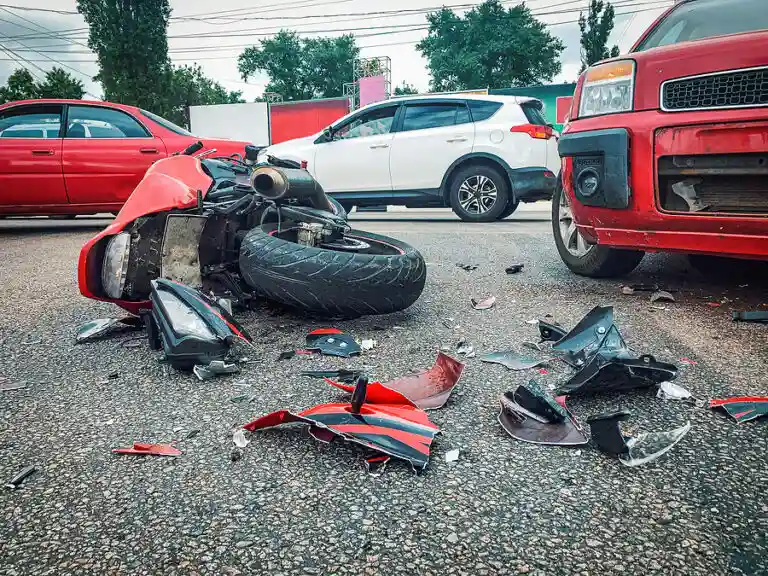
If a driver says they did not see your motorcycle before causing a crash in Atlanta, that driver may still be at fault. A driver’s failure to see a motorcycle is not automatically a defense; it may be evidence that the driver failed to pay attention to traffic conditions. Georgia drivers must watch for other vehicles, make safe decisions before turning or changing lanes, and ensure the roadway is clear before entering traffic. The key question is usually not whether the driver actually saw you. The key question is whether the driver should have seen you.
Can a Driver Be at Fault Even If They Never Saw the Motorcycle?
Yes. A driver can be at fault in an Atlanta motorcycle accident even if the driver honestly claims never to have seen the motorcycle. Georgia law generally does not excuse drivers who fail to observe traffic that should have been visible.
Drivers are expected to keep a proper lookout for motorcyclists and make safe decisions based on what is happening around them. If a reasonably careful driver would have seen the motorcycle under the same circumstances, the driver’s failure to see it may support a finding of fault. That is why the statement “I didn’t see the motorcycle” often does not end the case.
Why “I Didn’t See the Motorcycle” May Actually Help Prove Fault
One important issue in motorcycle accident cases is the difference between looking and seeing. Drivers frequently claim they looked before turning, changing lanes, or pulling into traffic. The problem is that looking is not always enough.
A driver who glances toward traffic but fails to recognize an approaching motorcycle may still be responsible for the crash. These collisions are often described as “looked but failed to see” events. The motorcycle is present, visible, and lawfully using the roadway, yet the driver fails to process what is in front of them before acting.
In Atlanta’s heavy traffic environment, drivers navigating busy intersections and frequent roadway merges may make decisions too quickly. When a driver looks but fails to truly observe an approaching motorcycle, the resulting collision may still be the driver’s fault.
Left-Turn Motorcycle Accidents Often Result in Driver Liability
One of the most common motorcycle accident scenarios in Atlanta occurs when a driver turns left across the path of an approaching motorcycle. Under O.C.G.A. § 40-6-71, drivers making a left turn generally must yield to oncoming traffic when that traffic is close enough to create a danger.
This means a driver cannot simply turn because they believe they have enough time. If an approaching motorcycle is close enough that the turn creates a risk of a collision, the driver is generally expected to wait. If the motorcycle was approaching lawfully and was clearly there to be seen, failing to notice it does not automatically excuse the collision.
Drivers Entering Traffic Must Watch for Motorcycles
Many serious motorcycle accidents occur when a driver exits a parking lot, private driveway, or side street and pulls into the rider’s path. Under O.C.G.A. § 40-6-73, drivers entering a roadway generally must yield to vehicles already traveling on that roadway.
O.C.G.A. § 40-6-72 contains similar rules for drivers approaching stop signs and yield signs. For injured riders, the practical meaning is straightforward: a driver pulling onto a road usually has the responsibility to wait until it is safe to enter traffic. Claiming not to have seen the rider does not automatically eliminate liability.
Lane-Change Accidents Frequently Involve Claims That the Motorcycle Was Not Seen
Motorcycle accidents also commonly occur when drivers change lanes into motorcycles. After these collisions, drivers often claim the rider was in a blind spot or that the motorcycle appeared unexpectedly.
Under O.C.G.A. § 40-6-48, a driver generally must make sure a lane change can be completed safely before moving into another lane. O.C.G.A. § 40-6-123 also requires drivers to use appropriate signals before changing lanes or turning.
If a driver changes lanes into a motorcycle, claiming not to have seen the rider may support the argument that the driver failed to check mirrors, monitor traffic, or make sure the lane was clear.
How Do You Prove the Driver Should Have Seen the Motorcycle?
In many Atlanta motorcycle accident cases, fault comes down to evidence. Police reports, witness statements, traffic camera footage, surveillance recordings, photographs, vehicle damage, and accident reconstruction analysis may help establish whether the motorcycle was visible before the collision occurred.
The most important question is often simple: Was the motorcycle there to be seen? If the evidence shows the motorcycle was visible, lawfully operating, and occupying a location where a reasonably attentive driver should have noticed it, the driver’s claim that they did not see the motorcycle may strengthen the injured rider’s case.
What Insurance Companies Often Argue
Insurance companies frequently try to use visibility arguments to reduce or deny motorcycle accident claims. They may argue that the motorcycle was difficult to see, appeared farther away than it actually was, or approached too quickly. Those arguments do not automatically determine fault.
Under O.C.G.A. § 40-6-310, motorcyclists generally have the same rights to use Georgia roads as drivers of cars and trucks. Under O.C.G.A. § 40-6-312(a), motorcycles are entitled to the full use of a traffic lane.
Georgia law also requires motorcycles to operate with headlights and taillights illuminated while being operated on public roads. O.C.G.A. § 40-6-312(e). If the motorcycle was visible and a reasonably careful driver would have noticed it, the driver’s failure to see the motorcycle may still support a finding of fault.
Contact an Atlanta Motorcycle Accident Lawyer
If a driver hit your motorcycle and now claims they “never saw you,” the outcome of your case may depend on proving that the motorcycle was there to be seen and that the crash never should have happened. Evidence can disappear quickly, and the driver’s version of events may become harder to challenge as time passes.
Butler Kahn has recovered significant results for injured riders, including a $1.5 million motorcycle accident settlement. The firm’s attorneys have earned recognition from Georgia Trend’s Legal Elite, Super Lawyers, The National Trial Lawyers Top 100, and other respected organizations. A lot of lawyers can fight. Our lawyers win. If you were injured in Atlanta or the surrounding area, contact Butler Kahn by calling (678) 940-1444 or contacting us online for a free consultation with an Atlanta motorcycle accident lawyer.


Matt Kahn is an Atlanta personal injury lawyer and a partner at the law firm Butler Kahn. Matt has dedicated his career to fighting for individuals and families who had been harmed by the negligence of others. At Butler Kahn, he has had the honor of helping families who have lost children in motor vehicle accidents and people who were critically injured. He helped a family secure a $45 million settlement to provide lifetime care for their son, who was critically injured in a motorcycle accident, a $40 million settlement in a guardrail case, a $30 million settlement in a pedestrian case, a $3.5 million settlement in a sexual assault case. Matt is a graduate of Emory University School of Law and has been recognized as a Super Lawyers’ Rising Star and by Best Lawyers as One to Watch. He has received an Avvo 10.0 Top Attorney rating. Connect with me on LinkedIn
- Airplane Accident
- Auto Accident
- Back Injury
- Bicycle Accident
- Boating Accident
- Brain Injury
- Bus Accident
- Car Accident
- Civil Rights
- Court System
- Crime Victims
- Crosswalk Accident
- Dog Bite
- Drunk Driving
- DrunkDriving
- Elder Abuse
- Firm News
- Georgia
- Insurance
- Jeep Fire
- Lawyers
- Liability
- Medical Malpractice
- Motorcycle Accident
- Negligence
- Nursing Home Abuse
- Pedestrian
- Personal Injury
- Product Liability
- Rape
- Ride Share
- Scholarship
- School Injury
- Sexual Assault
- Slip and fall
- Truck Accident
- Uncategorized
- Work Accident
- Wrongful Death
 Contact Us Now






Lawrenceville, GA 30046
Jonesboro, GA 30236